Meet Us at CarApp World Europe | October 5
Book a meeting

En
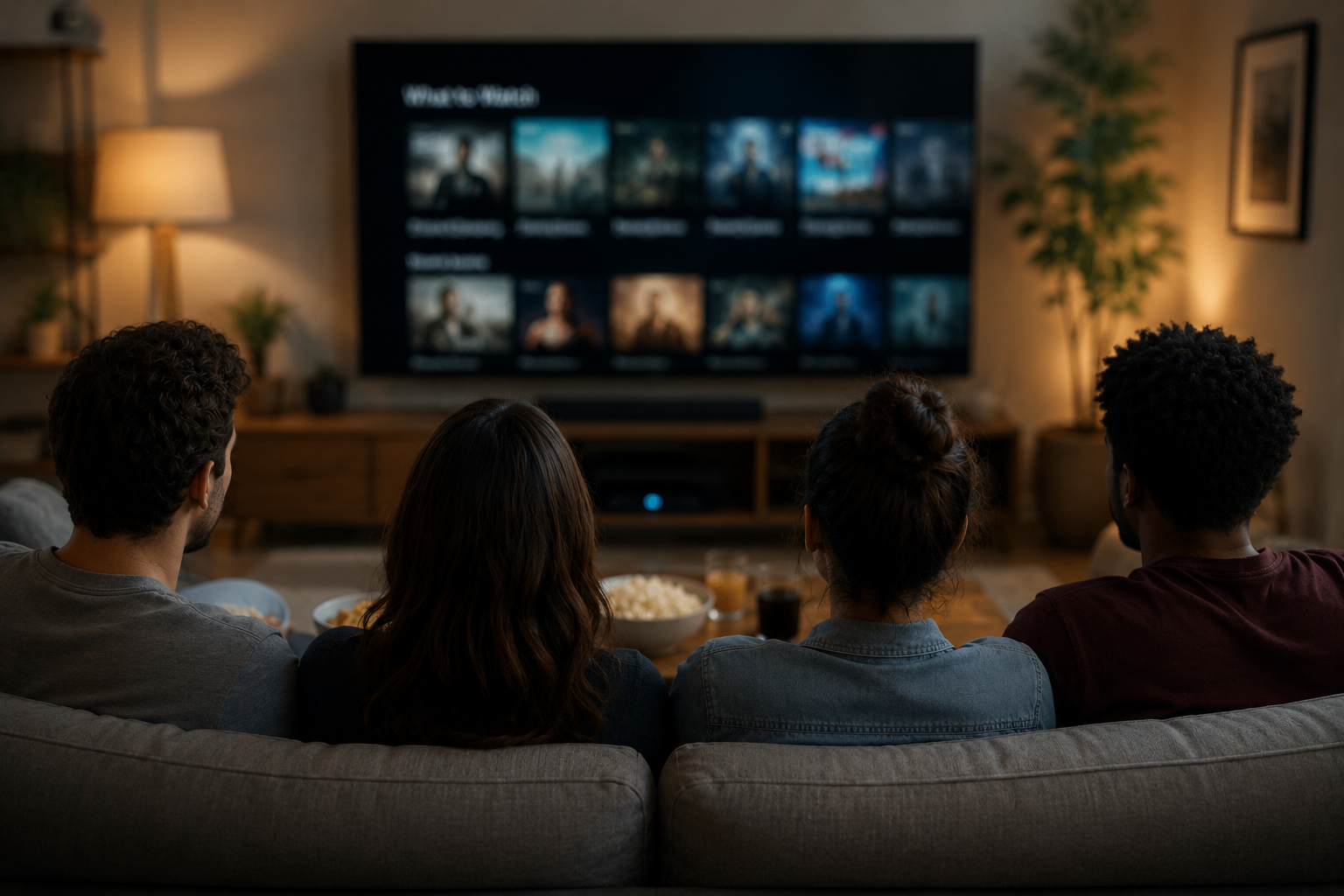
It's Friday. The kids have eaten, or maybe you've just had a great dinner with friends, the sofa is claimed, and the remote is somewhere under a cushion. By the time anyone agrees on a mood, six apps are open across the screen. Ten minutes have passed. Nobody is watching anything yet. The relaxed night the service was supposed to create has become a frustrating negotiation, the kind that ends with no content, or with everyone on their phones.
The room operators rarely see
The viewer arrives in a quarterly review as a number. ARPU, churn rate, the count of streaming apps integrated this cycle. Each of those is real and each of them matters. None of them, however, describe the ten minutes on the sofa, and that is the part of the product the subscriber actually lives in. Here's the part that's easy to miss. The people deciding how the product gets built, what it looks like, and which problems it solves are viewers too. They have their own Friday nights. Yet inside the business the buyer gets handled as a procurement line and the viewer gets handled as a churn statistic, as if they were two different people.
The cost shows up in the same report
Gracenote's most recent State of Play report found that nearly half of viewers would leave a service because of how hard it is to find something to watch. On average, people now spend around 14 minutes looking for something before they watch it. Discovery has meanwhile moved up to the operating-system layer on most modern devices, while plenty of operator interfaces still open onto a wall of apps and ask the viewer to do the sorting. The churn an operator is trying to fix and the experience on the couch are the same problem, described in two different rooms.
And it isn't a young-viewer problem
It's tempting to file this under restless twenty-somethings and move on. The data won't allow it. The 49% who would walk over discovery sit across every age group, not just the youngest. Older viewers are no longer a side note in streaming. Nielsen data reported by The Hollywood Reporter found that people over 50 made up around 36% of all YouTube viewing on TV screens in early 2025, enough to help push YouTube to the top of US TV distributors. They meet the same wall of apps, often with less patience for hopping between them. A service that designs its discovery only for the youngest, most forgiving users is quietly failing the household members who tend to keep the subscription in their name. The couch holds more than one generation, and so should the brief.
Write the brief for the person, not the role
The fix starts with who the design question is written for. When that question shifts from which apps can be integrated to what the person on the couch needs at 9pm on a Friday, the decisions shift with it. This is what the title is really getting at. A decision-maker who remembers their own Friday night builds a different product from one who only ever sees the dashboard. Aggregation stops being a logo wall and becomes a single surface, where one search, one set of recommendations, and one continue-watching row carry across services. Research from Advanced Television suggests aggregation done well keeps roughly a third of pay-TV subscribers engaged, which is another way of saying it keeps them from becoming the cancellation in next quarter's report. This is the problem 3Ready was built to answer, by reducing the number of decisions a viewer has to make before the first frame plays.
What that looks like in practice
Two examples recently delivered on the 3Ready roadmap show what this means in practice.
Channel Zapping 3.0 makes live TV channel zapping faster, with relevant programme information showing quickly to enable the user to decide if what's on suits their current mood.
Parental Control 3.0 adapts the experience to the household. Parents can set the age of their youngest child, and the interface only surfaces age-appropriate content, reflecting the reality that people of different generations often share the same screen.
Both features start from the same question: what does the person sitting in front of the screen actually need? More on each of these soon.
The test before the next roadmap
There's a simple check available to any operator. Watch the service the way a subscriber does, on a Friday, from the couch and not the QBR. The interface that respects those ten minutes is the one people keep paying for.





.jpg)