Meet Us at CarApp World Europe | October 5
Book a meeting

En
.jpg)
On 5 October, we joined around a 150 people from carmakers, tech companies and content businesses at Espace La Rochefoucauld in Paris for the first CarApp World Europe, organised by Dataxis.
Between the sessions and around 20 conversations, most of them with carmakers, there was plenty to take away. But one question kept coming up: once the apps and services are in the car, what makes people actually use them?
Dataxis shared some figures that put those discussions into perspective. Across the 21 European markets covered in its presentation, the installed base of vehicles with an embedded in-car operating system is forecast to grow from an estimated 11.3 million in 2026 to 60 million by 2031. That’s a lot more vehicles where these services could reach people. Getting them used is the next challenge.
From connected vehicles to active ones
Felix Walter, our CGO, joined Cédric Jarkovsky from Transatel | NTT, Petr Kredba from Škoda, Thomas Groenendijk from Mitsubishi Motors Europe and Brigitte Both from smart Europe for the Next-Gen In-Car Connectivity & Communication panel, moderated by Umair Siddiqui from SBD Automotive.
Something that stood out was the difference between a connected vehicle and an active one. Knowing how many cars have connectivity doesn’t tell you how many people are using the services available to them. And when you’re building a business around those services, that’s the number that matters.
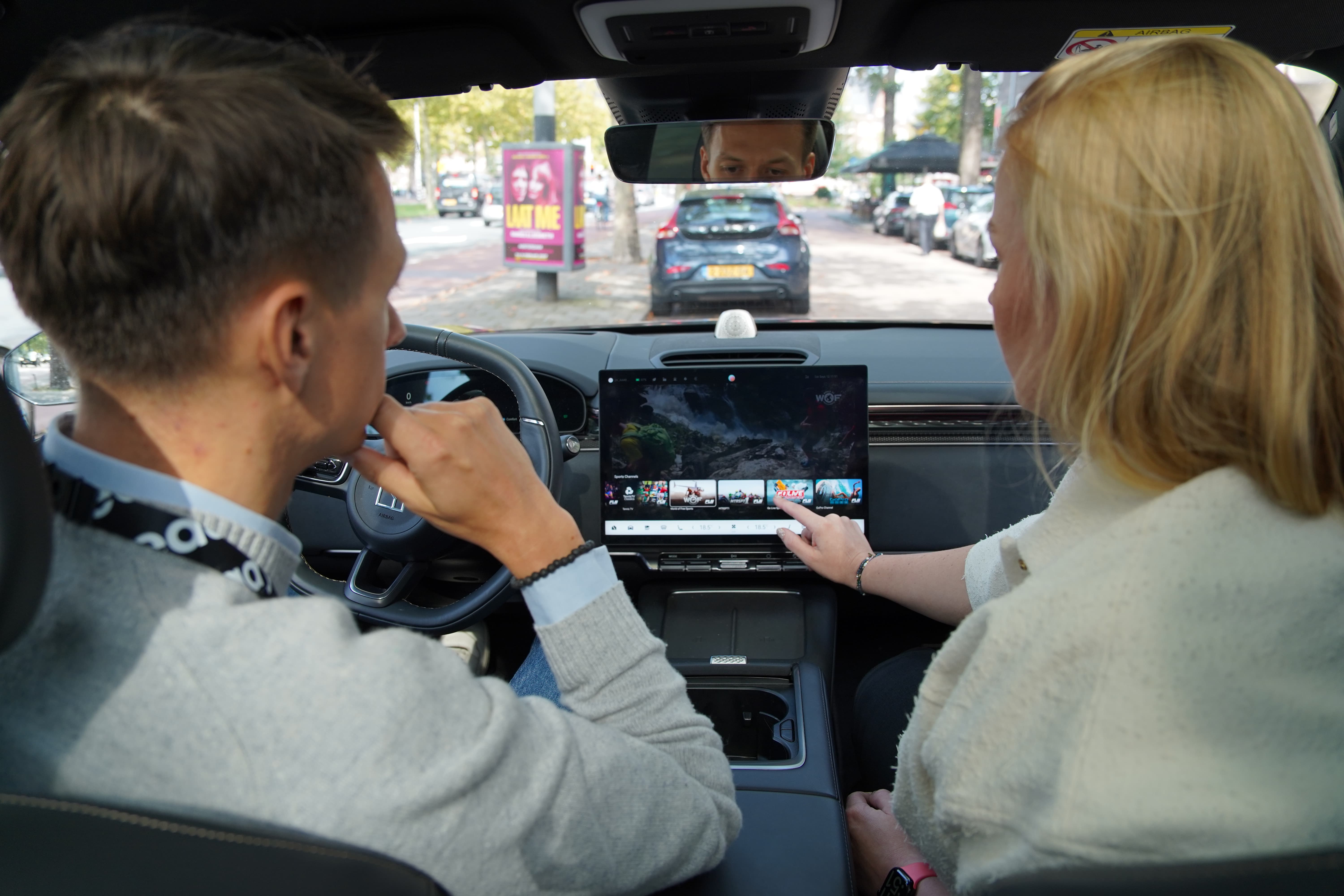
How people first come across a service makes a difference. If they have to find an app, download it and set it up, you’re asking them to make an effort before they’ve seen what it offers. Having it already available in the car removes some of those steps, although people still need a reason to try it.
The conversation also touched on the differences between new vehicles and cars already on the road. Licensing and revenue-sharing models need to take that into account. What works for a new launch won’t necessarily work across an existing fleet.
For us, it was especially good to hear Petr Kredba from Škoda talk about how working with 3SS helped them bring video into the car. He spoke openly about the challenges along the way, finding the right content and using what they learned from viewers to keep improving Škoda Play.
Felix shared an example from one of our live projects that made the discussion quite tangible. Live TV accounted for 10% of viewing in February and 67% in August. In between, the team had noticed growing interest in the analytics and made it the landing page in June.
It’s a good example of why the work after launch matters. You see what people are watching, make a change and follow what happens. That gives you something concrete to work with when deciding what to do next.
And, of course, usage led to the question of revenue. Streaming, advertising and branded content all offer possibilities, but they depend on people spending time with the experience. Content partners also want to know how their services perform in the car. Getting the content in is only the beginning of that relationship.
Five things we took away from the day
1. More apps aren’t necessarily the answer.
Several OEM speakers made this point. The size of the catalogue matters less than whether it has something people want to use.
A Dataxis survey from January 2026 added some context. Among 1,424 respondents with access to in-car apps in the UK, Germany and France, radio, navigation and music streaming featured most strongly in their top-five choices. Video and gaming ranked lower, although Dataxis pointed out that both are still available in only a limited share of vehicles in these markets.
The results reflect what people have access to today, so they don’t tell the whole story about what they might use in future. For carmakers, understanding those habits is a useful starting point when deciding what to offer.
2. Carmakers want a say in how everything comes together.
One speaker described this as “editorial governance”: deciding what appears, where and when. As more services enter the car, carmakers want to keep the experience consistent and recognisable, rather than leave users to navigate a collection of separate providers.
That includes choosing what gets visibility and making sure the overall experience still feels like part of their brand.
3. People still need to find the services.
We heard versions of the same story throughout the day: the store is built, the apps are available, but usage hasn’t followed.
Dataxis used Volvo and Apple Music as an example of why integration and visibility matter. Having an app available is one step; how it fits into the car’s interface and where people come across it also shape whether it gets used. That makes discoverability something to work on throughout the life of a service.
4. Getting apps into cars is still a slow process.
Testing came up as a practical challenge for developers. Emulators don’t always reflect what happens in a real vehicle, and access to better testing environments helps. There was also discussion of beta programmes that let developers test apps in selected production cars before a wider release.
Making that process easier would help teams bring new services to drivers sooner and spot problems before a broader rollout.
5. The revenue conversation always comes back to usage.
Subscriptions, advertising and revenue sharing were all part of the discussion. Whatever the model, it needs people to use the service. How you get them to try it, and what brings them back, needs to be part of the plan from the start.
What we brought back from Paris
A lot of what we heard reflects the questions we work through in our own projects at 3SS. What content should people see first? Can they find it easily? What are they watching, and what should we change based on that?
Dataxis also drew a comparison with connected TV. From our work across TV and automotive, the questions around content access, visibility and integration are familiar, even though when and how people use the screen in a car is different.
Those questions continue long after launch. Having the store and the content in place gives you a starting point. What you do next is what helps the experience become part of someone’s time in the car.
Thank you to Dataxis for a great first edition, to everyone who joined Felix on the panel, and to everyone we had the chance to catch up with or meet for the first time.
If we didn’t get a chance to speak in Paris, get in touch with Felix Walter or Thomas Guerbert, or visit 3ss.tv. We’d be happy to continue the conversation.