Meet Us at IBC 2026 | September 11-14
Book a meeting

En
Why the conversational layer is the new viewer relationship, and what NAB 2026 and StreamTV Europe made unmistakable
The television industry has always been good at reframing its own decline as transformation. It did so with the shift from analogue to digital, from linear to VOD, from owned hardware to app stores. Each time, operators kept their content and services relevant by controlling the interface.
And now, we are back at the same impasse, except this time it feels closer to that Indiana Jones moment with the boulder closing in fast and the side passages running out. Control of the interface is under real pressure, and the time to act is narrowing.
Different shows but with an uncomfortable common ground
Walking the floor at StreamTV Europe in Lisbon and following the conversations at NAB 2026 in Las Vegas, one thing our team in attendance remarked upon their return was that the industry is still struggling to agree on what its biggest problem actually is.
That tension was captured perfectly in one of the panels with three leading European operators who were asked to define the central reality of the market today, and whose answers could not have been more contrarian.
For one panellist, the model still held: “Content is King, Aggregation is Queen.” For another, that framing was already past its sell-by date: “Aggregation is over.” A third sidestepped the aggregation debate entirely and named a different reality rather focused on “The current winner being piracy.”
Three operators, three diagnoses, the same industry. No shared playbook, no consensus strategy. And underneath all three positions, the same structural problem whereby operators are losing control of the relationship with their viewers and running out of surfaces on which to reclaim it.
Is the aggregation debate the wrong one?
The dispute between “aggregation is everything” and “aggregation is over” is a debate about tactics when perhaps the real question should be strategic. Specially as both sides are partly right and largely missing the point.
What that panel did was split aggregation into two distinct ideas. First, aggregation of subscriptions (the commercial bundling that puts services on a single bill) and second, aggregation of the experience (the single curated point of discovery the viewer interacts with daily). What seems over is aggregation as we have practised it, through bundling and channel line-ups. What offers the next interesting area to compete seems aggregation of experiences. The homepage as a strategic concept is running out of life as also on the other side of the Atlantic, panellists at NAB described it as no longer authored but produced, assembled in real time from telemetry. Up for debate still is whether that role of trusted curator is played by the operator, or by someone else. And that someone else is now an AI assistant embedded in the TV itself.
Operational AI
Nothing new when we say, AI dominated every segment of the conversation at both shows. When it comes to AI for operations however, the proof-of-concept phase is behind us. The work now is making AI function reliably, efficiently and profitably at scale, with budgets that have not grown in proportion to the demands. If anything, the opposite.
Most of that discussion centred on production workflows, metadata automation and ad-tech. From a different angle, perhaps a quieter but more consequential, was the motion at the interface itself. Google is embedding Gemini into Google TV for multi-turn conversations. Amazon, on its new Vega OS, is pushing the on-screen assistant to the point where a viewer can describe a scene and have playback jump to that moment.
Main observations from participants of these shows include that large language models are inference engines, not knowledge stores, and they hallucinate where operators can least afford it. Any production discovery layer needs authoritative, operator-resident metadata sitting next to the model. From Gracenote’s research published at NAB a 49% of Gen Alpha already name AI chatbots as their best source for TV and movie recommendations, ahead of streaming and cable UIs at 41%. Discovery is migrating off the operator surface for the next generation while the industry is still working out how to ground it. The assistant is becoming the entry point to the TV experience, and that makes the app or EPG as the primary viewer relationship increasingly obsolete.
The portable experience layer
The real competition in pay TV today is for the viewer relationship. And so it should be. The daily habit, the first point of contact between the person and the universe of content available is a screen. For decades, operators owned that relationship through the set-top box. But that era when the STB was the only thing that mattered, is long gone. Retail devices have moved into millions of households alongside it, and the conversational AI layer in those devices is becoming the new remote, the new EPG and the new recommendation engine, all in one. Not only that, now any screen is that point of access, not necessarily just in the home.
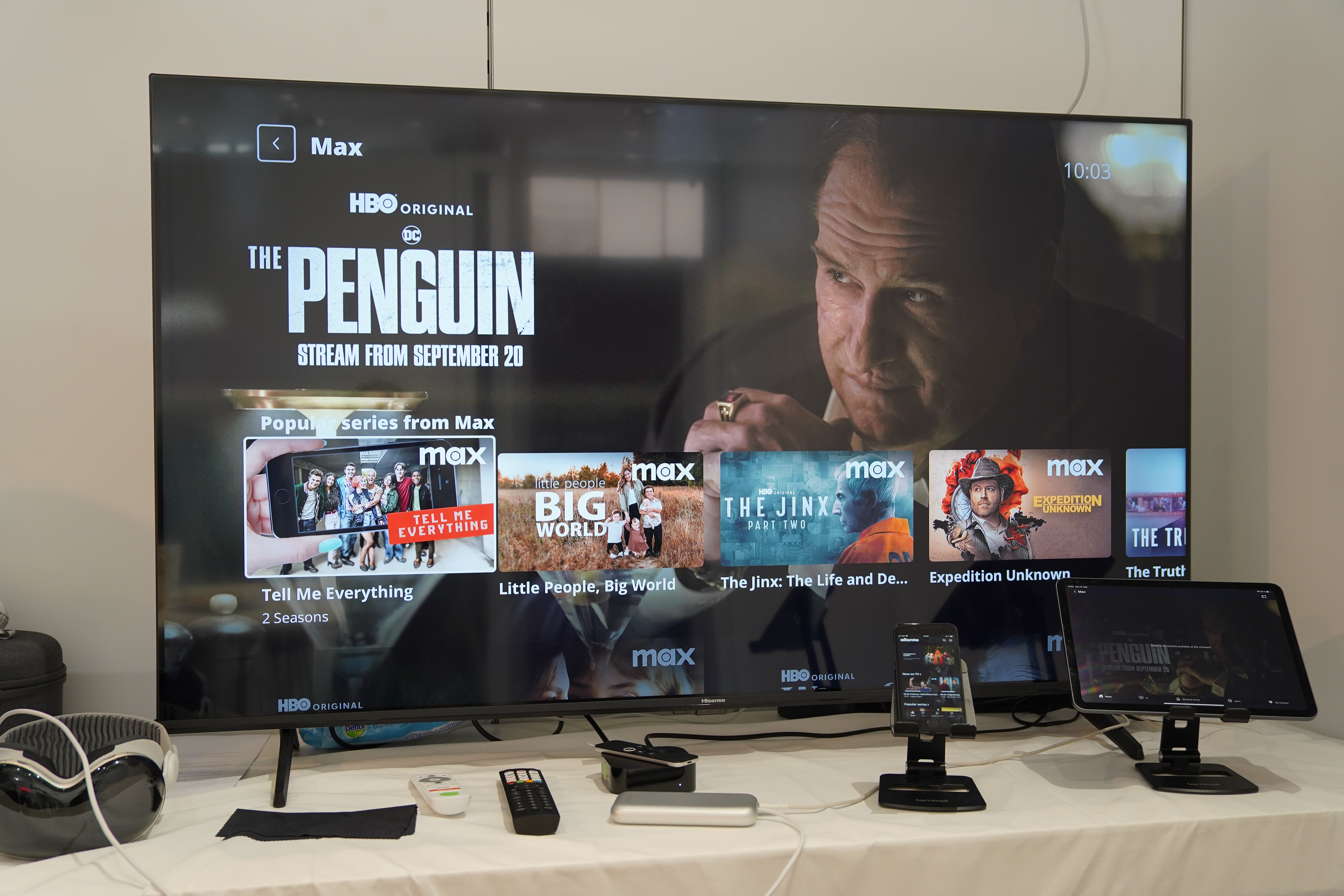
Hence a key answer to this must involve a conversational assistant that can travel. If an operator deploys an assistant that understands its services, content, packages and subscribers, that assistant can live on the STB app, the smart TV app, and any devices reached through operator tier deals in and outside the home. It becomes the consistent thread connecting every surface the viewer touches. The operator may not own the launcher on a Hisense or a Google TV, but they can own the conversation that bypasses it.




.jpg)