No items found.

En
Key Takeaways from DEG EnTech Fest 2026
DEG EnTech Fest is one of the most concentrated days of thinking in the entertainment technology calendar, and the 2026 edition delivered.
From streaming economics to in-car entertainment, from AI-powered discovery to the evolving craft of storytelling, the conversations painted a clear picture of an industry at a genuine inflection point.
At 3SS, we attend events like this not just to gather intelligence, but to sharpen our perspective on what it means to build great entertainment experiences, whether on the living room TV, in the browser, or increasingly, on the road.
The opening presentation by Circana reserach set the tone immediately. The era of explosive subscriber growth is over. The average US household now holds around six streaming subscriptions, and that number has plateaued. Surprisingly enough, older, higher-income consumers have replaced younger viewers as the dominant driver of streaming engagement.
This demographic shift is rippling through every layer of the market. Bundle uptake is growing fastest among households earning $100k+. According to their research 69% of households now use FAST services, and the FAST audience itself is changing also now with younger viewers, previously resistant, warming to the format. As Circana framed it: it is no longer about “Big beats Small.” In the AI era, “Fast beats Slow”.
This validates something we at 3SS already see in our automotive partnerships. The premium, mature viewer is the most valuable audience, and building for them demands quality, curation and context, not just volume.
Amy Reinhard’s keynote on Netflix’s advertising strategy was one of the day’s most closely watched sessions.
The key highlight if we had to choose one is that Netflix’s recent subscriber growth has come through its ad-supported tier and the platform is now a serious player in the premium-ads market.
A few other points to consider:
Streaming advertising is a mature, sophisticated business and all the platforms that have taken time and effort investing in first-party data and contextual intelligence seem to have bet on the right “horse”.
One of the day’s most concrete and provocative sessions came from Justin Inman of Emberos, who presented their research on what happens when AI assistants become the primary discovery layer for entertainment content.
The numbers were striking. Around 12% of all AI assistant queries are entertainment-related, and AI-driven discovery is growing at 400%, while traditional measurement tools are struggling to keep pace.
More concerning also is that AI models are mislabelling the genre of 14–28% of titles, causing studios to lose up to 33% of global search traffic.
Emberos’ practical guidance for studios in summary was very clear:
This resonated deeply with the work we do at 3SS around content discovery and metadata strategy. And personally, I believe that the phrase “AI discoverability equals distribution” is one we should expect to hear a lot more in the coming years.
The Search & Discovery panel explored what happens when AI assistants graduate from answering questions to curating entire entertainment experiences. The panellists from LG, Xperi, and Emberos painted a rich picture of where the industry is heading.
LG’s vision was particularly compelling with a home screen that prepares itself for the user, sensing who is watching, at what time and in what context, and surfacing the most relevant content before the viewer even knows what they want. Over half of CTV users report regular problems finding the right content today.
Justin Inman’s observation about “the internet is dividing into two. One segment for humans and one for LLMs” reinforces a key point studios and platforms must internalise metadata and content signals now need to perform on both tracks simultaneously.
Xperi and TiVo both emphasised that editorial curation and human judgement remain essential, AI will not replace the need for thoughtful content programming, but it will radically accelerate and personalise its delivery.
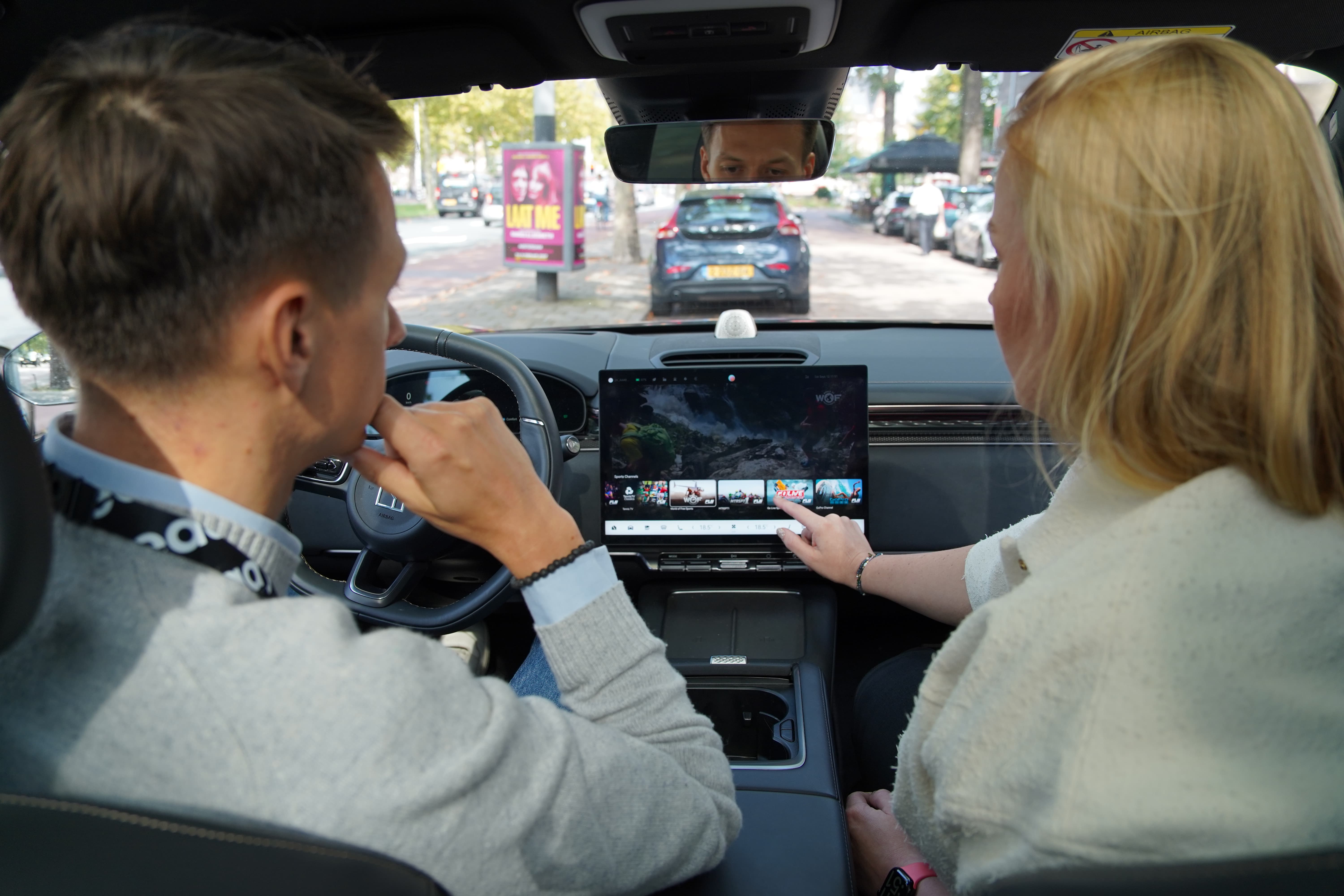
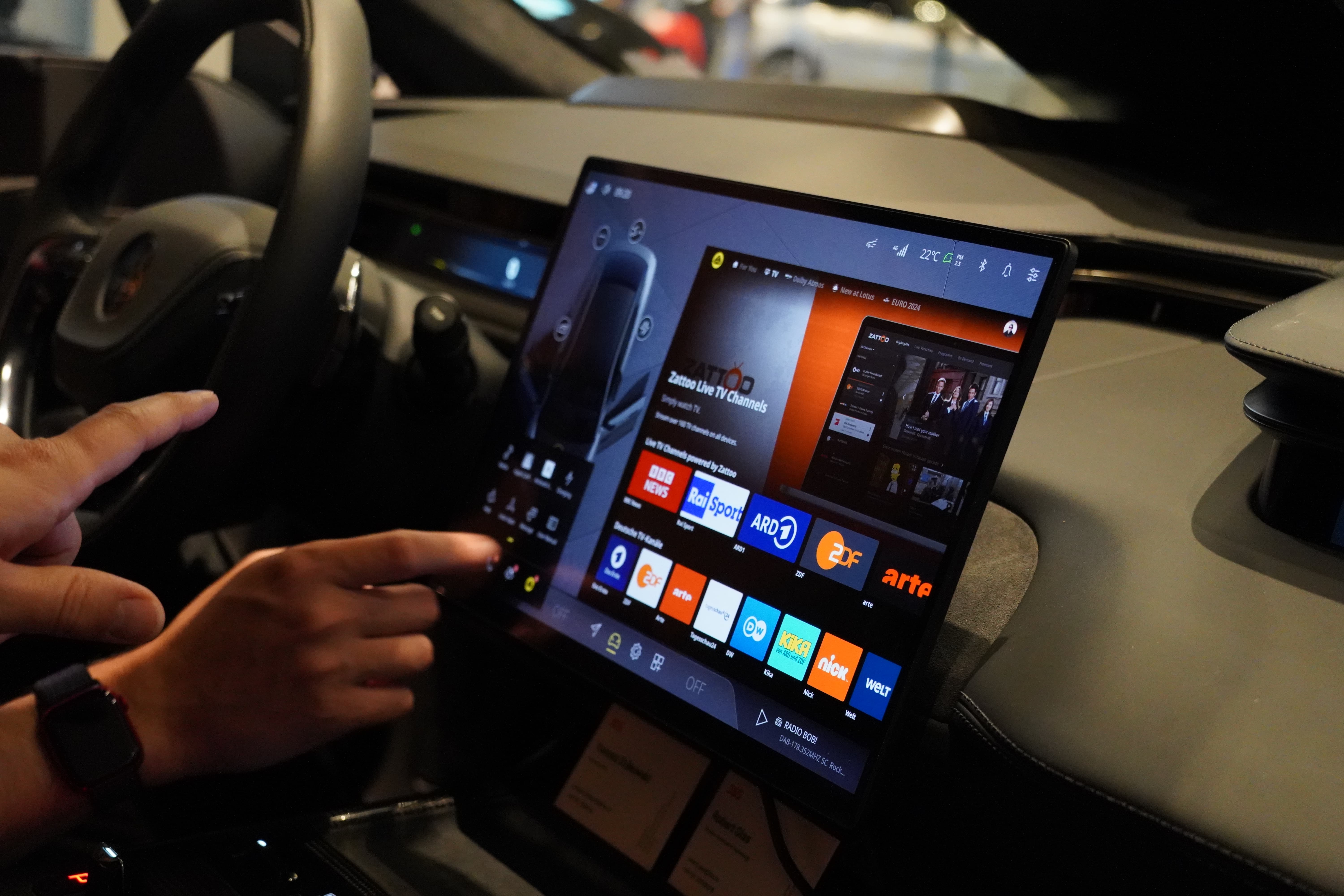
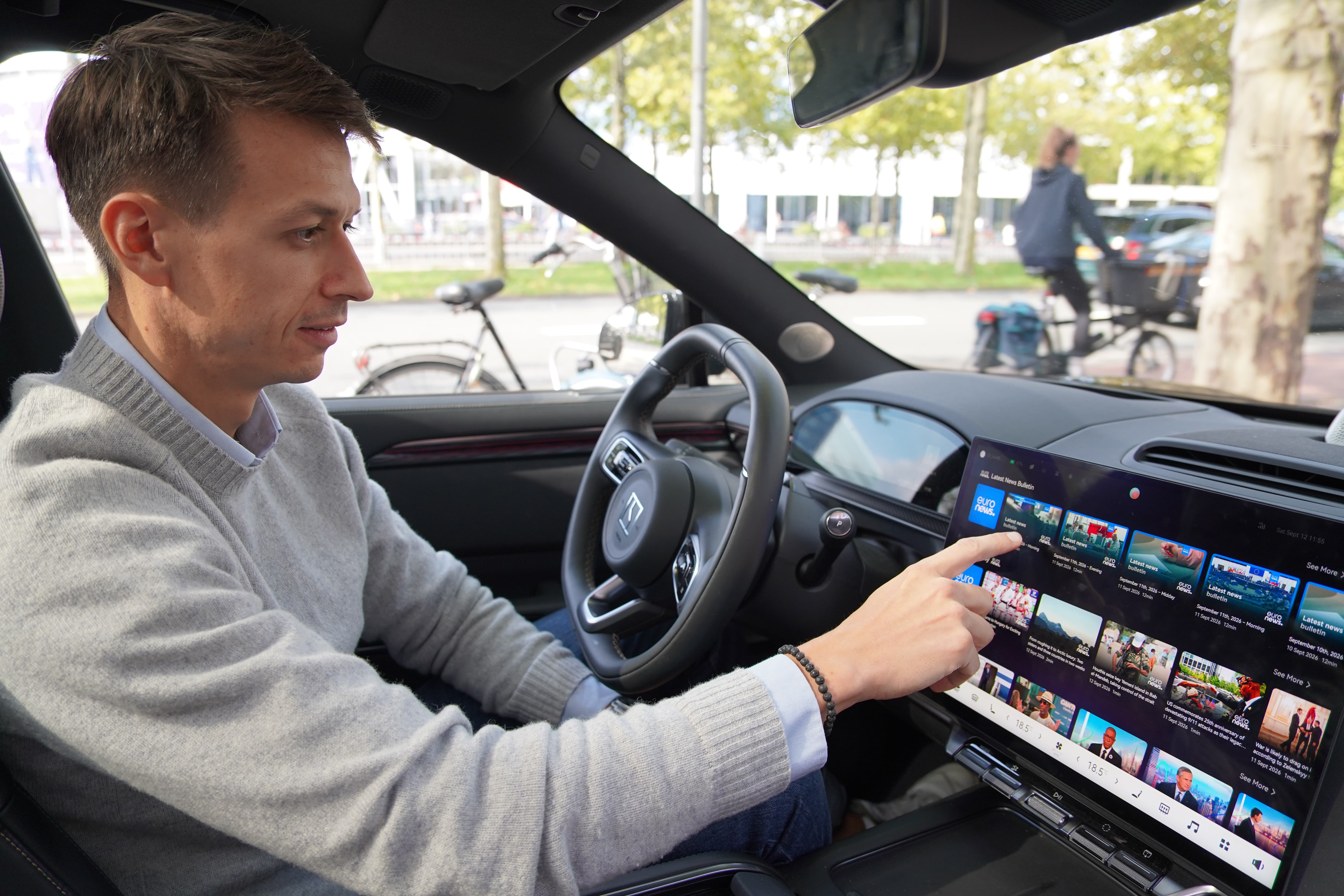
The in-car entertainment panel is one that we followed particularly closely, given our automotive projects and most recent launch with Skoda.
The session confirmed what we are already building for at 3ss. Vehicles are evolving into a genuine third space between home and work and the cabin experience is rapidly becoming a target for media, advertising, and engagement driven solutions.
The multi-screen cabin, driver, front passenger, rear seats, creates a large canvas for differentiated experiences and multiple simultaneous monetisation opportunities. OEMs are waking up to this. They are not ceding the cabin to CarPlay or Android Auto, but rather investing in proprietary platforms that they own, scale and monetise.
This is the space where much of our work at 3SS is focused today. The shift towards software-defined vehicles and connected entertainment platforms is not a future trend, it is the present, and the window to establish strong positions is open now.
Professor Euvin Naidoo’s session on AI and the OODA loop was another thought-provoking one. His central argument was around an AI-powered world, where competitive advantage no longer belongs to the biggest players, but to the fastest decision-makers.
The OODA loop (Observe, Orient, Decide, Act) was originally a military framework for aerial combat. Applied to media and entertainment in 2026, it becomes a template for organisational agility. AI could democratise content creation and collapse production costs. The competitive flywheel thus will not be budget; but the speed and quality of the decision-making cycle.
Crucially, Naidoo’s narrative distinguished between output and outcome. The goal is not to produce more content faster. It is to redefine what content means for the audience and that requires courage, creative partnership with AI, and willingness to experiment.
Kevin Reilly, in his keynote conversation, also echoed a similar thought. AI should not be regarded as a threat to creative work, but as a cognitive partner that amplifies human capability. If studios and producers want to remain relevant, they need to value creativity, run smart experiments, and build the operational muscle to act on what they learn, fast.
Two of the day’s later sessions highlighted the rise of new formats and new distribution models that are already reshaping the competitive landscape.
Angel Studios and Fandango represent a new generation of D2C (Direct to Consumer) models built on community and fandom rather than catalogue size.
Angel Studios is powered by over a million "Guild" members who fund and amplify content they believe in. Fandango has evolved beyond ticketing into a full film marketing and transactional partner.
Both are proof that audience relationship, not just content ownership, is a durable competitive asset.
Meanwhile, vertical micro dramas, the short-form, mobile-native format that generated $11 billion globally in 2025 are hitting Hollywood. The format is addictive, monetisation-efficient, and now expanding beyond its roots in romance content into new genres. It is a format that rewards fast iteration and audience intimacy over production spectacle.
Across every session at DEG EnTech Fest 2026, we noted that the gap between great content and great audience experience is increasingly determined not by what type of content exists, but by how it is discovered, delivered and contextualised.
AI is clearly accelerating every layer of this stack from how users find content, to how advertisers reach audiences, to how OEMs compete for attention in the cabin. T
The connective layer increasingly matters most.
Platforms, brands, and technology partners that can operate it with intelligence and speed will help define the next era of entertainment.




.jpg)