Meet Us at CarApp World Europe | October 5
Book a meeting

En
.jpg)
Your car is not a Smart TV. I've said this before and I'll keep saying it, because the industry keeps building like it forgot.
Here's where the confusion actually starts, though. In-car entertainment didn't invent a new business model. It borrowed one. Connected TV figured out the pieces years ago: a device maker, a handful of app stores, a shared screen, content owners fighting for a spot on it. Swap "device maker" for OEM and the picture barely changes.
Except it does change, in one important way. CTV is a young market sitting on a mature industry, consumer electronics. In-car is a young market sitting on top of one of the oldest, slowest-moving industries there is. That mismatch is the whole story.
An established industry, colliding with a market still being born
Automotive has a century of supply chains, regulation, and platform cycles behind it. In-car entertainment has none of that. It's improvising in real time, and the result is huge level of fragmentation
One OEM brand can run 2 or 3 different app stores across a single model line. It depends on the market it's sold in, the year it rolled off the line, or which infotainment generation happens to sit under the dashboard that week. Same badge on the car. Completely different content experience depending on where and when you bought it.
That's a genuinely hard problem to solve on the OEM side, and an even harder one for content partners trying to reach drivers through it. Big barrier to entry, both directions. Nobody here is being lazy, the complexity is real.
Does the app store actually do the job?
Say an OEM solves the fragmentation anyway. Say the app store is live, the icons are there, streaming apps are pre-installed from day one. Box ticked. App store shipped. Adoption numbers go into the deck.
Is that actually doing the job? Is a driver finding an icon and tapping through a login screen the thing that builds a habit, or the thing that makes them open the store once, shrug, and go back to mirroring their phone instead?
We believe it's the second one. When OEMs lean on mirroring, or bury content behind app store workflows, they hand the whole moment away. They lose the chance to shape what the in-car experience actually feels like as their brand. And they lose visibility into what drivers do once they're in there, along with the recurring revenue that comes from owning that behaviour instead of hosting someone else's app icon.
Winning that moment back means building around content. Not apps.
What happens when you take the app store away
This isn't a hunch. We have a live project that tested it directly.
Making content available in the car is only half the job. The other half is making sure a viewing habit actually forms, and that's the part most app store strategies quietly skip.
Picture the moment a driver taps the screen. Option one: a wall of app icons. One for news, one for kids, one for live sports, each its own tiny decision before anything plays. That's not a moment that builds a habit. That's a moment that trains a driver to stop looking.
Option two: one centralized hub. Everything already organised, already there, one tap away. No decision about which app to open first, because there's only one place to look.
We'd like to share data from one of our own projects in Europe. It backs up the case plainly: frictionless access to content is what makes in-car entertainment actually work.
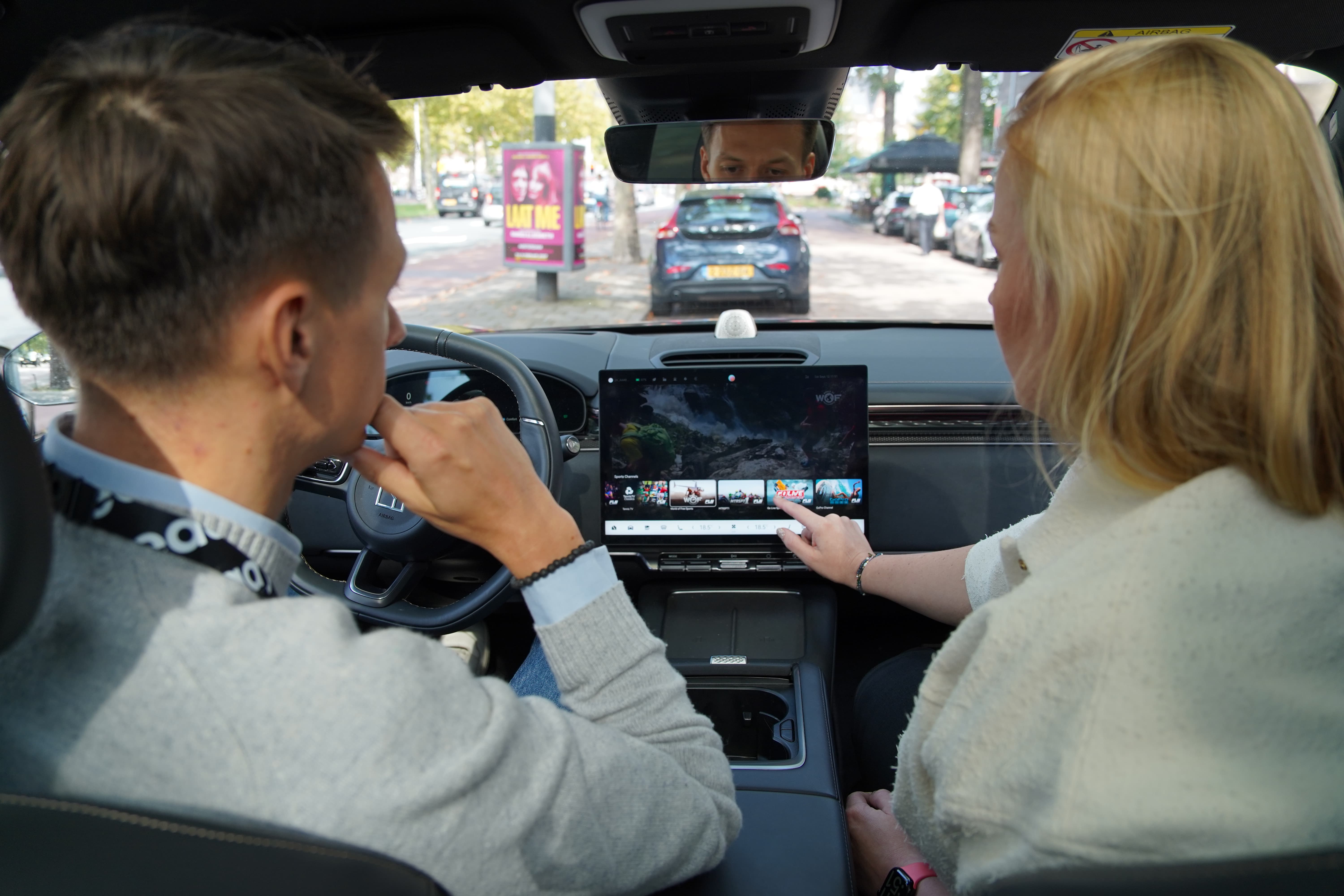
Here is what it looks like in practice:
The real alternative isn't a better app
Your car isn't a Smart TV, and it isn't a phone either. Drivers don't want to shop for content behind the wheel, they want it there the second they tap the screen.
That's the whole argument. Everything else is just the industry taking the long way round.