Meet Us at IBC 2026 | September 11-14
Book a meeting

En

For a long time, in-car infotainment has been treated as a technical problem to be solved: which operating system to choose, how to integrate apps, how to ensure performance and stability. Those questions still matter, but they are no longer the ones that define success.
As vehicles become software-defined, a different challenge is emerging at the center of the cockpit: who controls the in-car experience over time.
Drivers and passengers today don’t compare the car to other vehicles. They compare it to the digital experiences they already live with, on their phones, their TVs, and across connected ecosystems. Expectations are set outside automotive, but accountability remains firmly inside it. OEMs are expected to deliver rich, intuitive, always-evolving experiences while still meeting safety regulations, lifecycle constraints, and global market complexity.
This tension is reshaping how leading OEMs think about in-car entertainment.
From Infotainment Systems to Experience Platforms
Infotainment systems are no longer static software components delivered at SOP. Increasingly, OEMs are treating them as experience platforms, systems that must evolve continuously, adapt to context, and support brand differentiation across years, markets, and models.
An experience platform is not defined by the number of apps it supports. It is defined by how deliberately content is curated, how consistently the experience is presented across platforms, and how easily it can evolve without reengineering the vehicle software itself.
This is precisely where many OEMs feel friction today: the gap between platform stability and experience flexibility.
Solutions like 3Ready were designed around this reality, separating the experience layer from the underlying OS, and allowing OEMs to evolve content, UI structure, and promotion dynamically, without destabilizing the vehicle software stack. In a software-defined vehicle, that separation is no longer optional, it is foundational.
Why Content Has Become a Strategic OEM Asset
Content used to be a checkbox: make sure popular services are available and move on. That approach no longer holds.
Today, content influences how customers perceive quality, modernity, and relevance, long after the vehicle has been delivered. It also plays a growing role in monetization strategies that extend beyond the initial sale, from aftersales engagement to feature activation and digital services.
Equally important, content is becoming central to the OEM, customer relationship. When content strategy is fully outsourced to third-party ecosystems, OEMs risk losing visibility, flexibility, and ultimately differentiation. The challenge is not access to content, but governance of the experience around it.
This is where Platforms like 3Ready Automotive with a dedicated Control Center at the heart of the service, become strategically relevant, giving OEMs a single control layer to manage content, campaigns, and experience updates across fleets, regions, and platforms.
The Real Challenge OEMs Are Solving (Even If They Don’t Phrase It That Way)
In conversations with OEM teams, the problem is rarely framed as “we need more content.” Instead, it surfaces indirectly.
OEMs talk about the difficulty of keeping experiences consistent across Android and Linux programs. They talk about the cost and risk of updating UX through vehicle software releases. They worry about how to localize content strategies by region without fragmenting operations. They want to move faster, but with fewer dependencies and less risk.
These are not integration problems. They are orchestration problems.
And orchestration requires a different mindset.
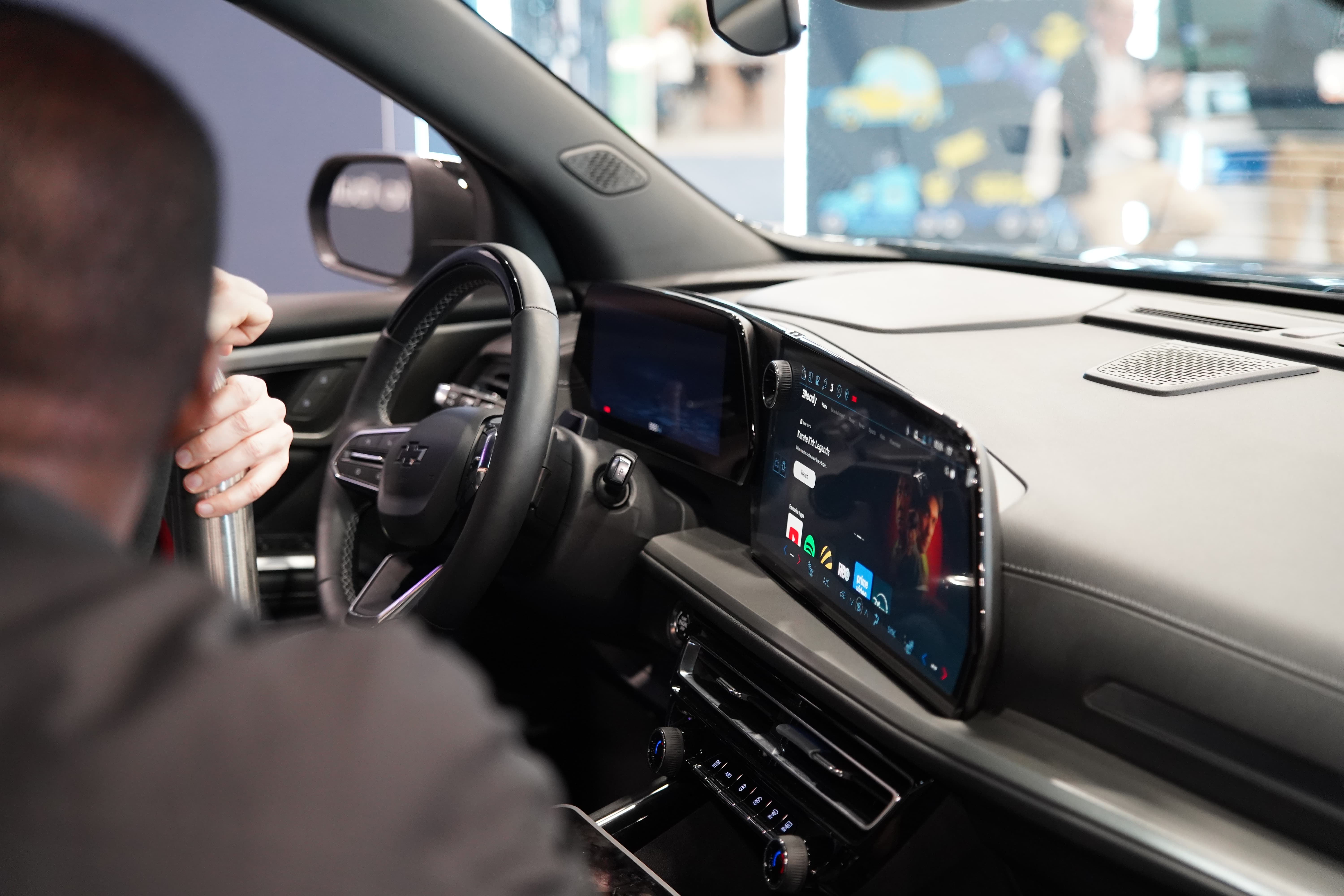
Beyond Aggregation: Orchestrating the In-Car Experience
Aggregation has been the dominant strategy for years: more apps, more services, broader ecosystems. While aggregation increases breadth, it does not guarantee coherence, differentiation, or scalability. Orchestration, by contrast, allows OEMs to actively shape the in-car experience. It enables dynamic curation, localized promotion, and controlled experimentation, without touching core vehicle software.
With 3Ready Automotive, OEMs can update UI structures, content collections, and campaigns in real time, while maintaining fleet-wide consistency across AAOS and Linux. This is what allows the in-car experience to evolve at the pace of consumer expectations, without compromising automotive robustness.
Entertainment as a Service: Speed Without Surrendering Control
Another shift we are seeing is in how OEMs think about content commercialization. On one side, there is pressure to move faster, reduce complexity, and control costs. On the other, there is a clear reluctance to lock the in-car experience into rigid, third-party-driven models that limit long-term flexibility.
This is where Entertainment-as-a-Service models are gaining attention, not as a shortcut, but as a way to balance speed with control. When designed correctly, these models allow OEMs to launch with a rich, curated offering while avoiding fragmented licensing and operational overhead. Crucially, they work best when the OEM retains ownership of the experience layer and can evolve it over time.
The key question is not whether content is bundled or modular. It is who remains in control of how that content is experienced.
Automotive-Grade Entertainment Is Context-Aware by Design
The car is not a living room, and it should not pretend to be one. What makes in-car entertainment compelling is not copying consumer devices, but adapting to the unique context of driving. Park-to-drive transitions, audio continuity, voice-first discovery, and multi-screen coordination are not constraints, they are opportunities to create experiences that feel purpose-built for the vehicle.
OEMs that embrace safety-aware, context-driven design will deliver experiences that feel intuitive rather than restricted. This is where automotive-grade entertainment differentiates itself from generic digital platforms.
Looking Ahead
The future of in-car entertainment will not be decided by operating systems alone. It will be defined by how much control OEMs choose to retain over their experience, their brand, and their customer relationship.
The OEMs that succeed will treat content as a strategic asset, invest in orchestration rather than accumulation, and adopt platforms that evolve throughout the vehicle lifecycle.
In that future, in-car entertainment stops being a feature, and becomes a competitive advantage.




.jpg)